

Through Lines?
In a few parts.

This is Part One
I still think often of how we’ll get through all this—and who we’ll choose to be when that time comes. I think as well who our new leaders will be, and the mighty task that will lay before them: a repairing of harm and things so deeply wounding, those of us alive right now might never get to see a full healing. When I think of those future leaders, I think of my grandson. He is among that generation of upcoming leaders. When he is of age, I think as well of the questions he’ll ask. Of the questions he should ask. Of the questions he better ask, for I envision for him to be a part of creating something better—something better than this.
Those questions he’ll ask?
The Poetics of Elders
I find myself listening to more podcasts of late—but not podcasts of the “popular” kind (no Joe Rogans, no comedians, no influencers, no quacks, and no explicit politics). When I look back upon those I’ve recently listened to, they center on certain themes—namely, how do we humans cultivate what we know are the “better angels of our nature” in order to regain a sense of wholeness with each other, with our earth, and with the universe. Or in other words, how we’ll best get through all this.
I try to listen to Elders who speak of Soul.
The majority of these recent podcasts have featured some very wise women—women who have earned the privilege of being called Elder; women who have lived full lives, who have witnessed first hand the world’s suffering; women who have survived various forms of trauma and/or patriarchy that men simply would never be able to comprehend, let alone survive; women whose voices typically are not heard or even acknowledge by the masses, but voices nonetheless that were always there, even if they whispered their wisdom. I have some books authored by these women, but there is a palpable and meaningful difference, an enriched difference, when I am hearing their own voices give voice to their stories, their trauma, and their wisdom/guidance.
One such Elder Woman is the poet and zen buddhist Jane Hirshfield.
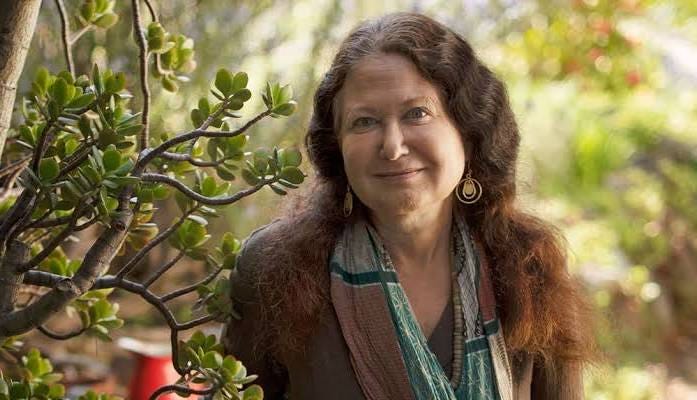
During this particular podcast, an interview with Jane Hirshfield, the close to two hour conversation meandered wondrously through the rich meadows of depth psychology, emptiness/spaciousness, the importance of awe, and, more poignantly, the necessity of holding one’s grief, gently, close to one’s heart. During the interview, Hirshfield read a number of poems that touched on these themes, that centered on the Soul’s work. A couple of those poems came from one of her many books of poetry, one* that I have and keep in my study, on my desk, within arms reach. I was listening to the interview while I was walking, but when I got home, I took that book from among its neighbors (she’s in excellent company there, that particular neighborhood of my books: Mary Oliver, Rumi, Charles Bukowski, Whitman, Rilke, Angelou, Carrie Newcomer, and others—it’s a crowded but precious neighborhood, those books nestled next to each other there on my desk). I didn’t have to “dust it off,” because those books right there, they don’t gather dust. They are sacred in that way. They are used. I use them. I’m using one, now.
The first poem of this book I’m referring to serves as the organizing clarion call for all the rest of the poems to follow. That same poem, a “bearing witness” poem, serves as our answers to the questions or statements my grandson and his generation, as I referenced above, should (better) speak aloud when, indeed, we have given up our morally feeble hold on the “reins of control” within these present moments. At that time, we indeed will no longer be here when such an honest and innocent interrogation happens—when the harsh judge of these times, history, and those who take it seriously, look back in sad wonder.
It’s a powerful poem.
~~~~~
Let Them Not Say

Let them not say:   we did not see it.
We saw.

Let them not say:   we did not hear it.
We heard.

Let them not say:   they did not taste it.
We ate, we trembled.

Let them not say :   it was not spoken, not written.
We spoke,
we witnessed with voices and hands.

Let them not say:    they did nothing.
We did not-enough.

Let them say, as they must say something:

A kerosene beauty.
It burned.

Let them say we warmed ourselves by it,
read by its light, praised,
and it burned.

—2014
These times call for honesty and sincerity. When my grandson’s generation answers the questions of their children and grandchildren, questions asked about us (“so why did they let it happen then?”), we should live, now, so that my grandson doesn’t have to say “they did nothing.”
“We did not-enough.”
For…
Not enough understood the difference between the charisma and the narcistic hatred. Not enough distinguished the words of feigned care from the utter, inherent disdain. Not enough knew of just how ignorant and uncurious they are. Not enough saw the danger inherent in a second term, after the travesty of the first term. Not enough knew the difference between cult worship, and idealism through moral ideals. Not enough looked beyond the words to the actions. Not enough understood what it takes to “keep the republic” (just as Benjamin Franklin warned). And the biggest lesson it is hoped we’ve learned by now, a lessen that had we already learned and counted upon and not taken for granted (due to our comfort and apathy and sense of futility), for our democracy… not enough voted.
Not. Enough. Voted.
For had enough voted, none of this would have come to fruition. We would be living a different reality. I know this because, later in the Hirshfield book, this wonderful collection from this wonderful and wise Elder, this divine feminine, she tells me so in a different poem:
~~~~~
Day Beginning with Seeing the International Space Station and a Full Moon Over the Gulf of Mexico and All Its Invisible Fishes

None of this had to happen.

Not Florida. Not the ibis’s beak. Not water.

Not the horseshoe crab’s empty body and not the living starfish.

Evolution might have turned left at the corner and gone down another street entirely.

The asteroid might have missed.

The seams of limestone need not have been susceptible to sand and mangroves.

The radio might have found a different music.

The hips of one man and the hips of another might have stood beside

each other on a bus in Aleppo and recognized themselves as long-lost brothers.

The key could have broken off in the lock and the nail-can refused its lid.

I might have been the fish the brown pelican swallowed.

You might have been the way the moon kept not setting long after we thought it would,

long after the sun was catching inside the low wave curls coming in

at a certain angle. The light might not have been eaten again by its moving.

If the unbearable were not weightless we might yet buckle under the grief

of what hasn’t changed yet. Across the world a man pulls a woman from the water

from which the leapt-from overfilled boat has entirely vanished.

From the water pulls one child, another. Both are living and both will continue to live.

This did not have to happen. No part of this had to happen.

—2016
~~~~~
That’s one heckuva title, isn’t it? That’s one helluva poem!

Only had we done enough, instead of accomplishing not-enough.
“No part of this had to happen.”
I could go through the litany of everything that didn’t have to happen, but you’re living through them too—renaming them here would be hubris and pain-inducing. We have enough of each.
Look, all of this is meant to lay the foundation for a few more thoughts that, as indicated in the title above, as a result of my sincere wonder of how we’ll get through all this, and who we’ll be when that time comes, serves as the beginning of a possible through-line. I’m not a soothsayer, or fortune teller, or dealer of tarot cards, or reader of palms, or a prognosticator, or clairvoyant.
What I am is a grandpa worried about his grandson and his grandson’s future world. What I am is a grandpa, and human, attempting to live in a manner in which my grandson will be able to tell his grandchild that their great-great grandfather did enough; bore witness to the suffering; knew that none of it, no part of it, needed to happen; saw a through-line that was right and true; and showed the way forward, and through, simply by how he lived. And then gave witness to it “with voice and hand.” You’re reading one of the hand’s product.
If my grandson is the only one who will read this, at some future date, then that will be enough for me. By the way, my dear grandson, my dear J^, I love you to infinity and back.
More of the through-line next time.
As Always and with Ubuntu,
~ k
🙏🏼
Ahimsa, people. Ahimsa.
* if you want the name of the book or podcast I’m referencing, let me know in a comment. This would show me the level of your care, curiosity, engagement, and desire to “do enough, not “not-enough.”


Thanks for all of this, Kert, and amen to all you say here. We SHALL overcome...
This post, Kert. And yes, please offer the names of the podcast and the book. I always appreciate your recommendations.
When I began leading yoga teacher trainings, a friend recommended that I read Parker Palmer's The Courage to Teach." I wish I had read it sooner, as a new yoga teacher myself. My copy is a keeper.